How do you plan a successful event? The 5 most important steps for event organizers
Published on March 31, 2026
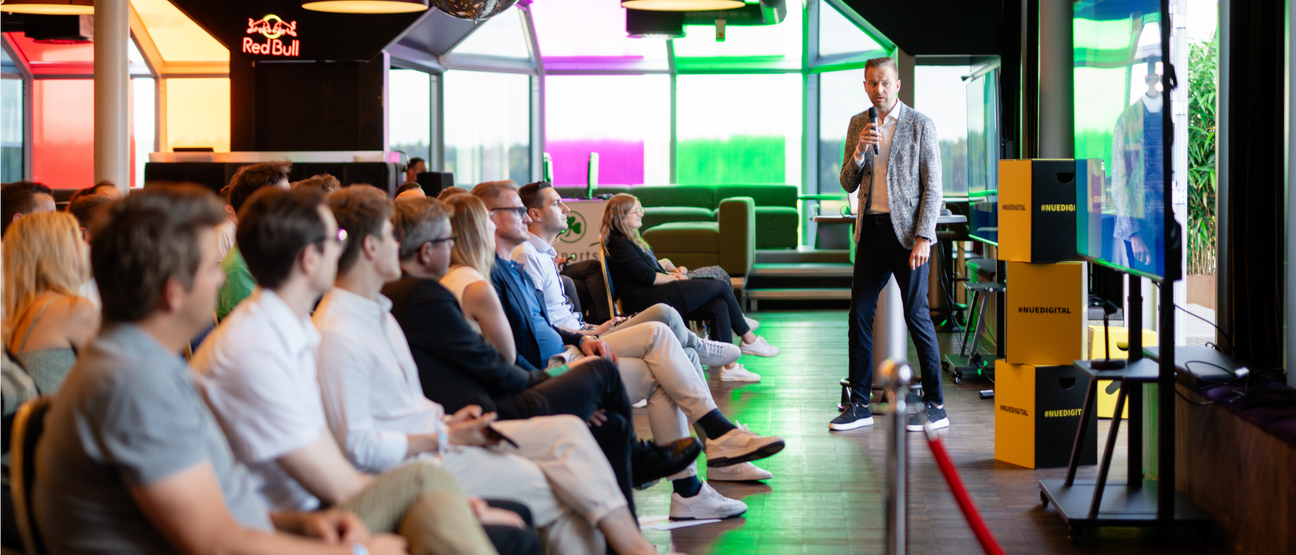
A successful event starts with three questions: What do you want participants to take away? Who do you want to reach? And what’s the best way to reach them? If you can clearly answer these three questions, you’ve laid the foundation for everything else.
At the Nürnberg Digital Festival, hundreds of organizers demonstrate how it’s done every year. Johanna and Elwira from the NUEDIGITAL project management team know the most common pitfalls and what makes an event truly successful.
The 5 steps at a glance:
1. Define the goal and target audience
2. Choose the right format for the target audience
3. Plan the location, speakers, and content
4. Design the event flow with a clear arc
5. Build communication that fosters commitment
Find out what’s behind each step.
Step 1: First the goal, then everything else
Before you start thinking about the venue or speakers: What do you want to achieve with your event?
That may sound obvious, but it makes all the difference. An event designed to inspire requires a different format than one aimed at building knowledge. A networking evening operates by different rules than a hands-on workshop.
Ask yourself three questions before you continue planning:
- What do I want to achieve with my event?
- Who do I want to reach?
- How can I best reach this target audience?
If you’ve answered these three questions well, you’ve already completed the hardest part of the planning.
That may sound obvious, but it makes all the difference. An event designed to inspire requires a different format than one aimed at building knowledge. A networking evening operates by different rules than a hands-on workshop.
Ask yourself three questions before you continue planning:
- What do I want to achieve with my event?
- Who do I want to reach?
- How can I best reach this target audience?
If you’ve answered these three questions well, you’ve already completed the hardest part of the planning.
Step 2: The format should suit the target audience—not the other way around
You have complete freedom to decide what your event will look like. Virtual, hybrid, in-person: anything goes. But not everything works equally well.
Virtual, for example as a webinar: this often works well in the morning or late afternoon. People can fit it into their workday. A 45-minute webinar at 11 a.m. is much easier to justify than a three-hour in-person event.
Hybrid: possible, but complex. A hybrid event must work for both groups—those on-site and those online. Simply filming and streaming the ongoing event isn’t enough. Online participants need real added value and genuine interaction; otherwise, you’ll lose them within the first fifteen minutes.
On-site: Experience shows that the afternoon or early evening works well. People wrap up their workday, come to your event, and ideally end with some casual networking. It doesn’t feel like a chore, but rather a successful way to end the day.
One more note on the concept: When you invite people with expert knowledge, don’t start from scratch. A hands-on workshop instead of a lecture is much more likely to meet an experienced audience.
Virtual, for example as a webinar: this often works well in the morning or late afternoon. People can fit it into their workday. A 45-minute webinar at 11 a.m. is much easier to justify than a three-hour in-person event.
Hybrid: possible, but complex. A hybrid event must work for both groups—those on-site and those online. Simply filming and streaming the ongoing event isn’t enough. Online participants need real added value and genuine interaction; otherwise, you’ll lose them within the first fifteen minutes.
On-site: Experience shows that the afternoon or early evening works well. People wrap up their workday, come to your event, and ideally end with some casual networking. It doesn’t feel like a chore, but rather a successful way to end the day.
One more note on the concept: When you invite people with expert knowledge, don’t start from scratch. A hands-on workshop instead of a lecture is much more likely to meet an experienced audience.
Step 3: Venue, Speakers, Content – the Building Blocks
Do you have your own space? Then use it. An event held at your own company offers insight, feels authentic, and often has a charm that a generic conference room lacks.
If not: Over the years, the festival has built up a large network of venues that know what a festival event requires. Reach out to the team. We can help you make the connection.
The same goes for speakers. Are there in-house experts who can share their knowledge? Or do you need external voices? Both work. The main thing is that it fits the theme and the target audience.
If you plan your speakers early, you’ll have the content under control early on. And if you have the content under control early on, you can better communicate what participants can expect. That, in turn, helps with the next step.
If not: Over the years, the festival has built up a large network of venues that know what a festival event requires. Reach out to the team. We can help you make the connection.
The same goes for speakers. Are there in-house experts who can share their knowledge? Or do you need external voices? Both work. The main thing is that it fits the theme and the target audience.
If you plan your speakers early, you’ll have the content under control early on. And if you have the content under control early on, you can better communicate what participants can expect. That, in turn, helps with the next step.
Step 4: Events that create a lasting impression stick in your memory
Participants don’t come just to sit down, listen to a presentation, and leave. At least, not willingly.
A good event has a flow. It starts with the arrival phase: the time when people look around, grab a coffee, and strike up initial conversations. Then comes the content portion. And afterward, if the content was good, people want to talk about it. That’s exactly what the Q&A or the networking session afterward is for.
That sounds obvious. But it isn’t always. If you consciously plan this flow, you’ll almost automatically have a better event.
A good event has a flow. It starts with the arrival phase: the time when people look around, grab a coffee, and strike up initial conversations. Then comes the content portion. And afterward, if the content was good, people want to talk about it. That’s exactly what the Q&A or the networking session afterward is for.
That sounds obvious. But it isn’t always. If you consciously plan this flow, you’ll almost automatically have a better event.
Step 5: Communication builds commitment
Here lies one of the most common mistakes: planning an event well and then simply waiting to see if the registered attendees actually show up.
Which isn’t necessarily the case. Experience shows that the no-show rate at the festival is between 40 and 50 percent. That’s not bad news; it’s the reality of a large summer festival where people sign up for many events at the same time.
Two consequences of this:
Overbook. If you want 100 people in your room, allow 150 to 180 registrations. Experience shows that there are almost never too many people who actually show up.
Stay in touch with your participants. You can send them messages via the festival platform. Send a short email two weeks in advance: what to expect, who’s speaking, and how to get to your event. Send another one a week before. The system automatically sends a reminder 24 hours in advance, but your personal email is more important. It shows that there’s a real person behind the event who’s excited that they’re coming.
Which isn’t necessarily the case. Experience shows that the no-show rate at the festival is between 40 and 50 percent. That’s not bad news; it’s the reality of a large summer festival where people sign up for many events at the same time.
Two consequences of this:
Overbook. If you want 100 people in your room, allow 150 to 180 registrations. Experience shows that there are almost never too many people who actually show up.
Stay in touch with your participants. You can send them messages via the festival platform. Send a short email two weeks in advance: what to expect, who’s speaking, and how to get to your event. Send another one a week before. The system automatically sends a reminder 24 hours in advance, but your personal email is more important. It shows that there’s a real person behind the event who’s excited that they’re coming.
Your event description makes a difference
Before participants can attend, they need to find the event and want to sign up. That’s why the description on the festival platform is crucial.
The title should immediately convey what the event is about. Not vaguely, but clearly: This is the topic—it speaks to me (maximum 100 characters).
The short description (maximum 160 characters) isn’t an informational text. It’s a teaser. It should spark curiosity, make people want more, and directly appeal to the target audience.
The event description can be more detailed and should sound like an invitation, not an announcement. Who’s coming, what they can expect, why it’s worth it. Keywords help ensure the event is found in the program when someone searches specifically for it.
Please use a 3:2 aspect ratio for the preview image; otherwise, the edges will be cropped. It should help the right target audience stop scrolling and take notice.
The title should immediately convey what the event is about. Not vaguely, but clearly: This is the topic—it speaks to me (maximum 100 characters).
The short description (maximum 160 characters) isn’t an informational text. It’s a teaser. It should spark curiosity, make people want more, and directly appeal to the target audience.
The event description can be more detailed and should sound like an invitation, not an announcement. Who’s coming, what they can expect, why it’s worth it. Keywords help ensure the event is found in the program when someone searches specifically for it.
Please use a 3:2 aspect ratio for the preview image; otherwise, the edges will be cropped. It should help the right target audience stop scrolling and take notice.
Frequently Asked Questions
What is the no-show rate for the Nürnberg Digital Festival?
Based on past experience, 40 to 50 percent of registered attendees do not show up for the event. This is typical for a large summer festival where participants register for many events at the same time.
How many registrations should I allow if I’m expecting 100 people?
150 to 180 registrations. Experience from recent years shows that despite overbooking, there are almost never too many people who actually show up.
When should I send reminder emails to participants?
Two weeks before the event, one week before, and then again shortly before the day of the event. The festival platform’s system automatically sends a reminder 24 hours in advance. Personal emails from you are still more important, though: they show that there’s a real person behind the event.
Can I also submit a virtual event to the Nürnberg Digital Festival?
Yes. Virtual events, such as webinars, work well, especially in the morning or late afternoon when participants can fit them into their workday.
How long can the title of my event be on the festival platform?
A maximum of 100 characters. The short description is limited to 160 characters. Please upload images in 3:2 aspect ratio; otherwise, the edges will be cropped.
Based on past experience, 40 to 50 percent of registered attendees do not show up for the event. This is typical for a large summer festival where participants register for many events at the same time.
How many registrations should I allow if I’m expecting 100 people?
150 to 180 registrations. Experience from recent years shows that despite overbooking, there are almost never too many people who actually show up.
When should I send reminder emails to participants?
Two weeks before the event, one week before, and then again shortly before the day of the event. The festival platform’s system automatically sends a reminder 24 hours in advance. Personal emails from you are still more important, though: they show that there’s a real person behind the event.
Can I also submit a virtual event to the Nürnberg Digital Festival?
Yes. Virtual events, such as webinars, work well, especially in the morning or late afternoon when participants can fit them into their workday.
How long can the title of my event be on the festival platform?
A maximum of 100 characters. The short description is limited to 160 characters. Please upload images in 3:2 aspect ratio; otherwise, the edges will be cropped.
Let's get started!
Feel free to contact us if you haven’t submitted an event yet or have any questions about planning. If this is your first event at the festival: We’re glad you’re joining us. You can also find all the information on our website HERE.
Feel free to contact us if you haven’t submitted an event yet or have any questions about planning. If this is your first event at the festival: We’re glad you’re joining us. You can also find all the information on our website HERE.
.png?locale=en)
Svenja Sorger
Marketing, Projektorganisation
Nürnberg Digital Festival
Related Blog Posts
.png?locale=en)
From AI-powered gardening to phone bots: AI HUB Nuremberg...
Andrea Reindel on the AI HUB Nuremberg, AI use cases in gardening and medical practices, and why the project is being extended by two years.
Published on May 08, 2026
Read more.png?locale=en)
Feminist AI: Why AI Is a Question of Power and Control
Feminist AI is not a singular tool but a shift in perspective, aimed at shaping the power structures, design processes, and applications of AI in a more equitable manner.
Published on February 19, 2026
Read more