Between system, attitude, and responsibility
Published on June 01, 2026
.png?locale=en)
An article from bayern design
Artificial intelligence is currently transforming the creative industry faster than many other technologies before it. It is no longer just about new tools for image generation or text creation; AI is changing processes, roles, and the very way creative decisions are made. Today, designers are increasingly collaborating with systems that generate suggestions, prioritize content, or prepare decisions. This is shifting the nature of design: away from linear workflows, toward dynamic processes between humans and machines. It is also clear that for many industries, this marks the beginning of a new learning phase. Not only creatives, but entire organizations must now figure out how to use AI in a meaningful, responsible, and strategic way. As a result, new continuing education programs are emerging in many places that examine AI not only technically, but also strategically and culturally, including seminars at the bayern design Academy. To kick things off, the focus will be on perspectives: brands, processes, ethics, and leadership.
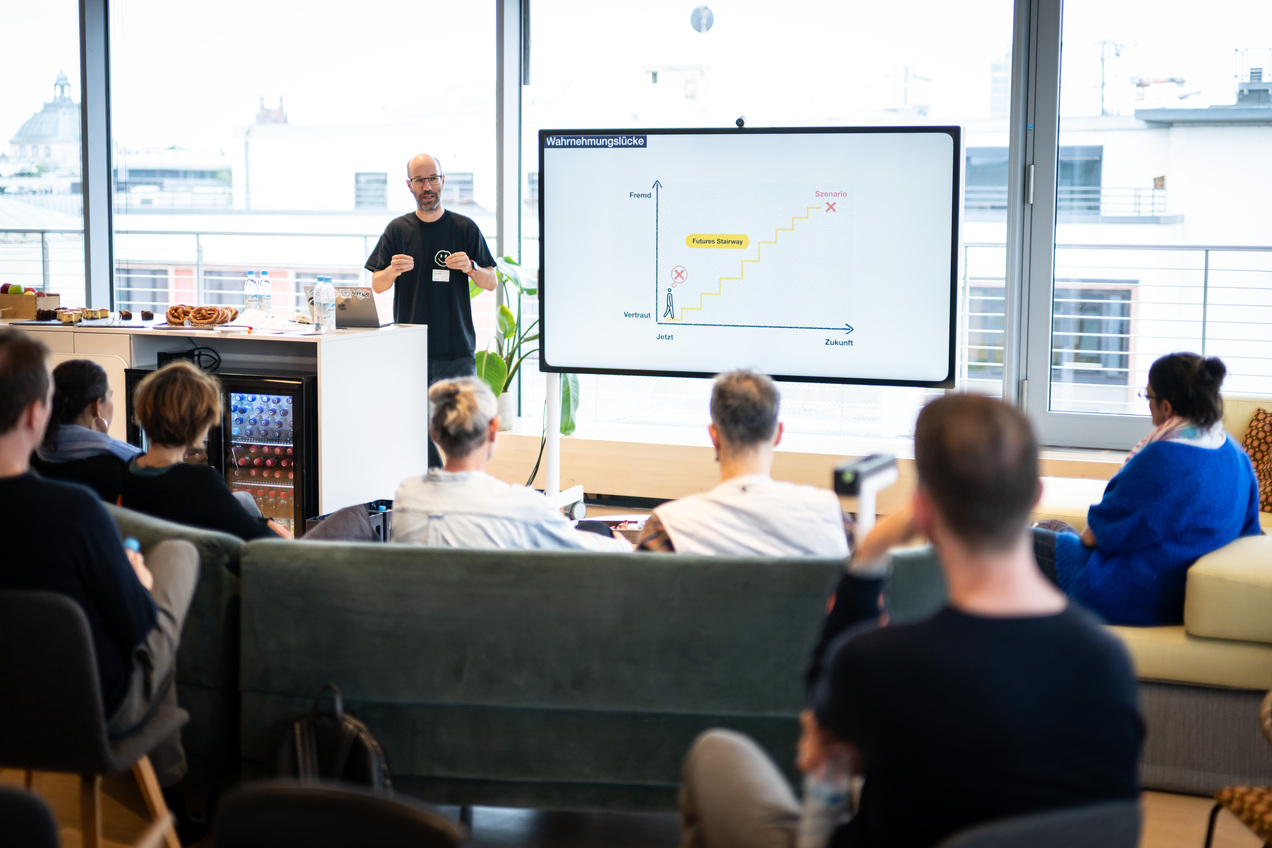
From tool to mindset
Historically, new technologies have always been part of creative upheavals—from desktop publishing to digital photography. AI, however, takes it a step further: systems no longer merely respond to inputs, but independently generate variations, suggestions, and content.
This brings to the forefront a skill that has long been taken for granted: making good decisions. When an infinite number of options can arise, selection becomes the true creative competence. As early as 2015, design theorist Ezio Manzini wrote in his book *Design, When Everybody Designs* that in a networked world, ultimately everyone designs—not just professional designers, but also organizations, communities, and institutions. This idea seems more relevant than ever in the context of generative AI. At the same time, ethical questions are coming into sharper focus. AI systems are not neutral; they reproduce existing data patterns and societal biases. That is why institutions worldwide are now addressing rules and guidelines for responsible AI—from UNESCO to the European AI Act or initiatives such as the Vatican’s Rome Call for AI Ethics.
This brings to the forefront a skill that has long been taken for granted: making good decisions. When an infinite number of options can arise, selection becomes the true creative competence. As early as 2015, design theorist Ezio Manzini wrote in his book *Design, When Everybody Designs* that in a networked world, ultimately everyone designs—not just professional designers, but also organizations, communities, and institutions. This idea seems more relevant than ever in the context of generative AI. At the same time, ethical questions are coming into sharper focus. AI systems are not neutral; they reproduce existing data patterns and societal biases. That is why institutions worldwide are now addressing rules and guidelines for responsible AI—from UNESCO to the European AI Act or initiatives such as the Vatican’s Rome Call for AI Ethics.
Designing under new conditions
For design teams, this means one thing above all else: design is becoming more strategic. It is no longer just about designing outcomes, but about defining the framework, processes, and responsibilities. Who decides what? Which tasks will be automated? Where does human judgment remain indispensable? And how do we build trust in systems that are often not fully transparent?
This is particularly evident right now in so-called agent-based AI systems. Companies are already experimenting with specialized AI agents that divide tasks among themselves or monitor each other—for example, by having one system generate content while another checks, evaluates, or documents it. AI is thus increasingly becoming part of organizational structures and not just individual software applications.
This is precisely where the new seminar series from the bayern design Academy comes in. Instead of individual tools, the focus is on four structural perspectives:
AI & Brands explores how brand identity functions in dynamic, generative systems—and how trust, consistency, and authorship are maintained as content is increasingly generated algorithmically.
AI & Design Processes explores how creative work is being reorganized: from human-in-the-loop approaches and decision-making logic to the question of how designers can maintain creative leadership despite automation.
AI & Ethics addresses specific challenges such as bias, transparency, dark patterns, and sustainability. The goal is not abstract theory, but the development of practical frameworks and initial approaches for creating your own AI policies.
Finally, AI & Leadership examines the organizational level: How do teams, responsibility, and corporate culture change as AI increasingly becomes part of everyday work processes? And how can human-agent collaborations be designed effectively?
The seminars are aimed at designers, strategists, creative directors, product managers, and executives who not only want to use AI but also consciously integrate it into their work reality.
For all information and to register: https://bayern-design.de/beitrag/about-ai/
This is particularly evident right now in so-called agent-based AI systems. Companies are already experimenting with specialized AI agents that divide tasks among themselves or monitor each other—for example, by having one system generate content while another checks, evaluates, or documents it. AI is thus increasingly becoming part of organizational structures and not just individual software applications.
This is precisely where the new seminar series from the bayern design Academy comes in. Instead of individual tools, the focus is on four structural perspectives:
AI & Brands explores how brand identity functions in dynamic, generative systems—and how trust, consistency, and authorship are maintained as content is increasingly generated algorithmically.
AI & Design Processes explores how creative work is being reorganized: from human-in-the-loop approaches and decision-making logic to the question of how designers can maintain creative leadership despite automation.
AI & Ethics addresses specific challenges such as bias, transparency, dark patterns, and sustainability. The goal is not abstract theory, but the development of practical frameworks and initial approaches for creating your own AI policies.
Finally, AI & Leadership examines the organizational level: How do teams, responsibility, and corporate culture change as AI increasingly becomes part of everyday work processes? And how can human-agent collaborations be designed effectively?
The seminars are aimed at designers, strategists, creative directors, product managers, and executives who not only want to use AI but also consciously integrate it into their work reality.
For all information and to register: https://bayern-design.de/beitrag/about-ai/
Between speed and responsibility
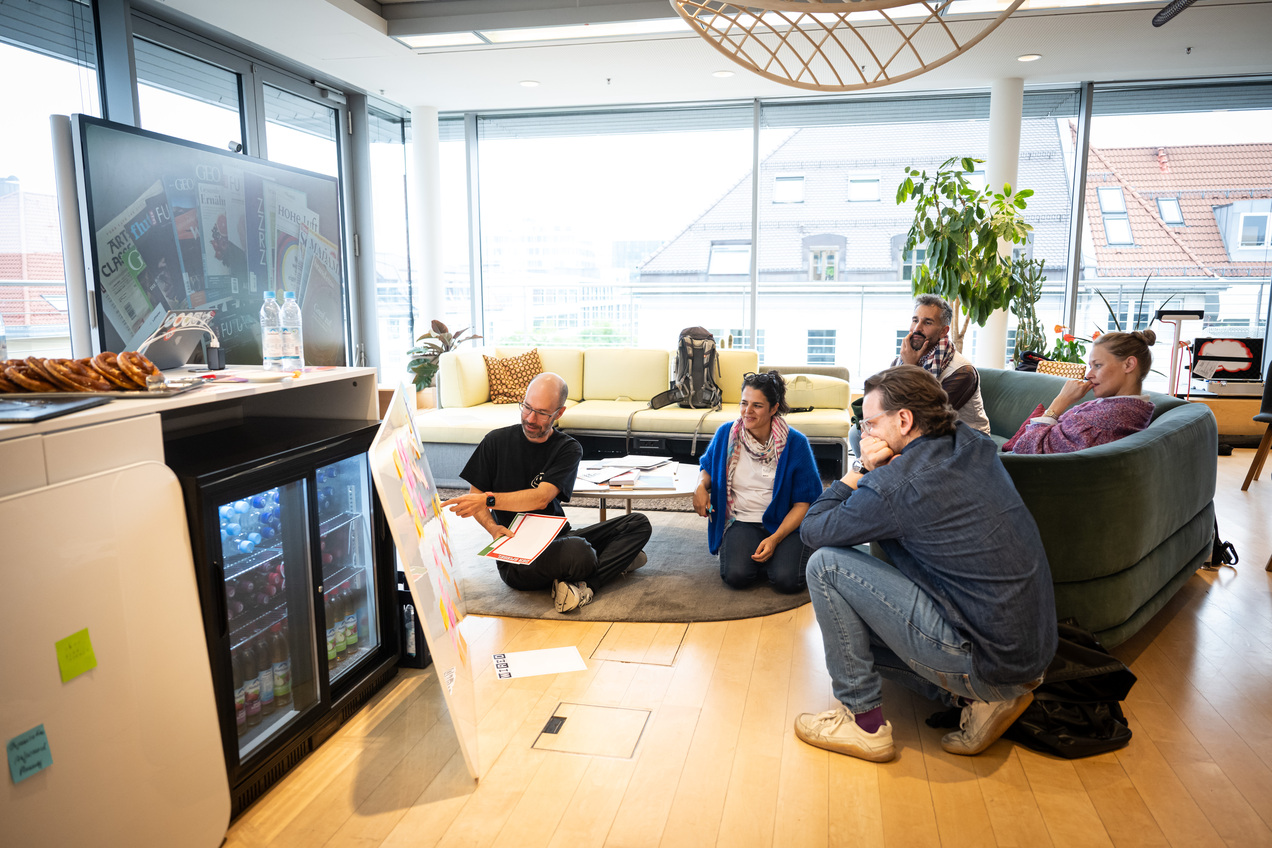
The faster systems can produce content, the more important attitude, perspective, and the ability to think critically become. After all, AI doesn’t just speed up processes—it also changes the conditions under which decisions are made. Perhaps this is precisely the central challenge of the coming years: not to automate everything as quickly as possible, but to consciously define the role humans should play in these new systems. Or, to put it in the words of Ezio Manzini: If everyone has the potential to shape the world today, the responsibility for how this shaping affects society grows accordingly. The bayern design academy’s seminar series therefore views AI less as a short-term trend and more as an opportunity to rethink design—strategically, culturally, and organizationally.
bayern design is the competence center for knowledge transfer and collaborations around design in Bavaria and a cooperation partner of the Nürnberg Digital Festival. This year, they are hosting the interactive cobotic installation “Mirror Me.” Learn more here.
.png?locale=en)
Svenja Sorger
Marketing, Projektorganisation
Nürnberg Digital Festival
Related Blog Posts
How do you plan a successful event? The 5 most important ...
Johanna and Elwira from the NUEDIGITAL team know the most common pitfalls and share what really makes a difference at an event — from the right image formats to the very first question you should ask yourself.
Published on March 31, 2026
Read more.png?locale=en)
From AI-powered gardening to phone bots: AI HUB Nuremberg...
Andrea Reindel on the AI HUB Nuremberg, AI use cases in gardening and medical practices, and why the project is being extended by two years.
Published on May 08, 2026
Read more.png?locale=en)
