How do feelings sound? - An interview with Yves Peitzner
Published on June 03, 2025
Ever wonder how a feeling sounds? In the Gefühlsrauschen installation, three folks create music together—straight from their emotions and brain activity. The result? A back-and-forth between sound, light, and their inner worlds.
#designconnects
An Interview by bayern design with Yves Peitzner.
#designconnects
An Interview by bayern design with Yves Peitzner.
Yves, how did the idea for Gefühlsrauschen come about—and what drew you to making brainwaves and emotions tangible, first through light, and now through music?
I’ve always been fascinated by the invisible stuff—thoughts, feelings, moods. In my earlier work, I used light—and often sound—as a kind of language for what’s going on inside us. So using music to reflect human emotions just felt like the natural next step.
The idea that brainwaves—and the emotions drawn from them—could be turned into a shared soundscape has something almost magical about it.
What really excites me is that moment when tech stops feeling cold and distant—and instead becomes a bridge between the inner world and the outside one, between people.
The idea that brainwaves—and the emotions drawn from them—could be turned into a shared soundscape has something almost magical about it.
What really excites me is that moment when tech stops feeling cold and distant—and instead becomes a bridge between the inner world and the outside one, between people.
In Gefühlsrauschen, three visitors create a sound space together. What’s going on between them—do they become an emotional sound collective?
That’s the hope! Gefühlsrauschen isn’t a solo performance—it’s something people do together. Three folks come into a space, each with their own inner emotional state. These feelings get turned into sound, which instantly affects everyone else in the room.
It creates this emotional feedback loop: feelings shape the music, and then the music shapes the feelings.
That back-and-forth forms an emotional sound collective—a kind of conversation between what’s inside and what’s around, between people and the space, and it keeps evolving as they interact.
It creates this emotional feedback loop: feelings shape the music, and then the music shapes the feelings.
That back-and-forth forms an emotional sound collective—a kind of conversation between what’s inside and what’s around, between people and the space, and it keeps evolving as they interact.
How did you design the space visually and physically to make the connection between people, emotions, and sound tangible?
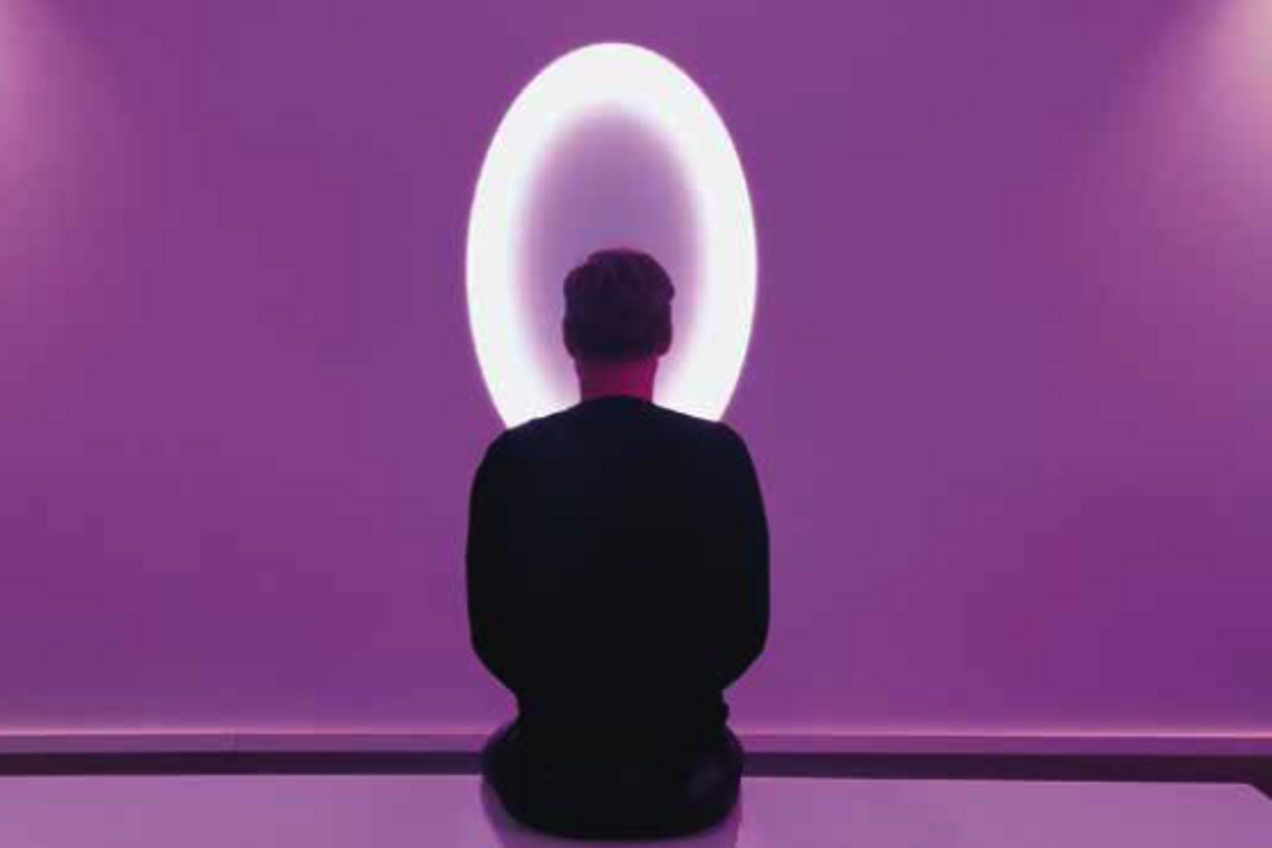
The space is intentionally minimalist—to really keep the focus on the interaction between the three people at its core.
We arranged them in a triangle, sitting around a central light sculpture. That layout gives it a clean and calm structure.
The light piece shows the group’s shared emotional “vibe.”
Immersion is key here—not through sensory overload, but with clear design and immediate feedback from the sound, light, and emotional input.
We arranged them in a triangle, sitting around a central light sculpture. That layout gives it a clean and calm structure.
The light piece shows the group’s shared emotional “vibe.”
Immersion is key here—not through sensory overload, but with clear design and immediate feedback from the sound, light, and emotional input.
When tech starts reading our emotions—what responsibility does design carry? How do you handle interpreting something as personal as feelings?
Tech that reads emotions enters sensitive territory—and that’s exactly why its design matters so much.
In Gefühlsrauschen, it’s not about diagnosing people. We’re just working with moods and emotional directions. The AI isn’t judging—it’s offering input. The goal was never to analyze people, but to create a space for resonance and interaction.
That’s why the design is low-key, transparent, and open to interpretation—because emotions aren’t just data points. They’re messy, alive, and deeply personal.
In Gefühlsrauschen, it’s not about diagnosing people. We’re just working with moods and emotional directions. The AI isn’t judging—it’s offering input. The goal was never to analyze people, but to create a space for resonance and interaction.
That’s why the design is low-key, transparent, and open to interpretation—because emotions aren’t just data points. They’re messy, alive, and deeply personal.
Where do you see installations like this—multisensory and data-driven—going in the future?
I see a lot of potential. In the arts, it could open new ways to connect with others and build empathy.
In therapy, especially in children’s hospitals, emotional states could be made visible through light and sound—gently supporting patients emotionally. In cities too—imagine smart homes or public spaces that respond to how people are feeling, trying to boost well-being using music or light cues. That could change how we relate to our environments—and to each other.
In therapy, especially in children’s hospitals, emotional states could be made visible through light and sound—gently supporting patients emotionally. In cities too—imagine smart homes or public spaces that respond to how people are feeling, trying to boost well-being using music or light cues. That could change how we relate to our environments—and to each other.
What moved you most while working on Gefühlsrauschen? Was there a moment where the tech suddenly felt very human?
I usually leave something unfinished in my installations. It’s like a frame that only gets completed when people step into it.
A lot of my work is experimental—I like watching how people respond, engage, and interact with it. What really moves me in Gefühlsrauschen is when three strangers sit down—and then out of nowhere, a beautiful chord emerges. Nobody says a word, but you can feel something happening between them. To me, it’s not that the tech is human—but it can show something human. It can help create connection and remind us how much we need resonance sometimes.
A lot of my work is experimental—I like watching how people respond, engage, and interact with it. What really moves me in Gefühlsrauschen is when three strangers sit down—and then out of nowhere, a beautiful chord emerges. Nobody says a word, but you can feel something happening between them. To me, it’s not that the tech is human—but it can show something human. It can help create connection and remind us how much we need resonance sometimes.
#designconnects
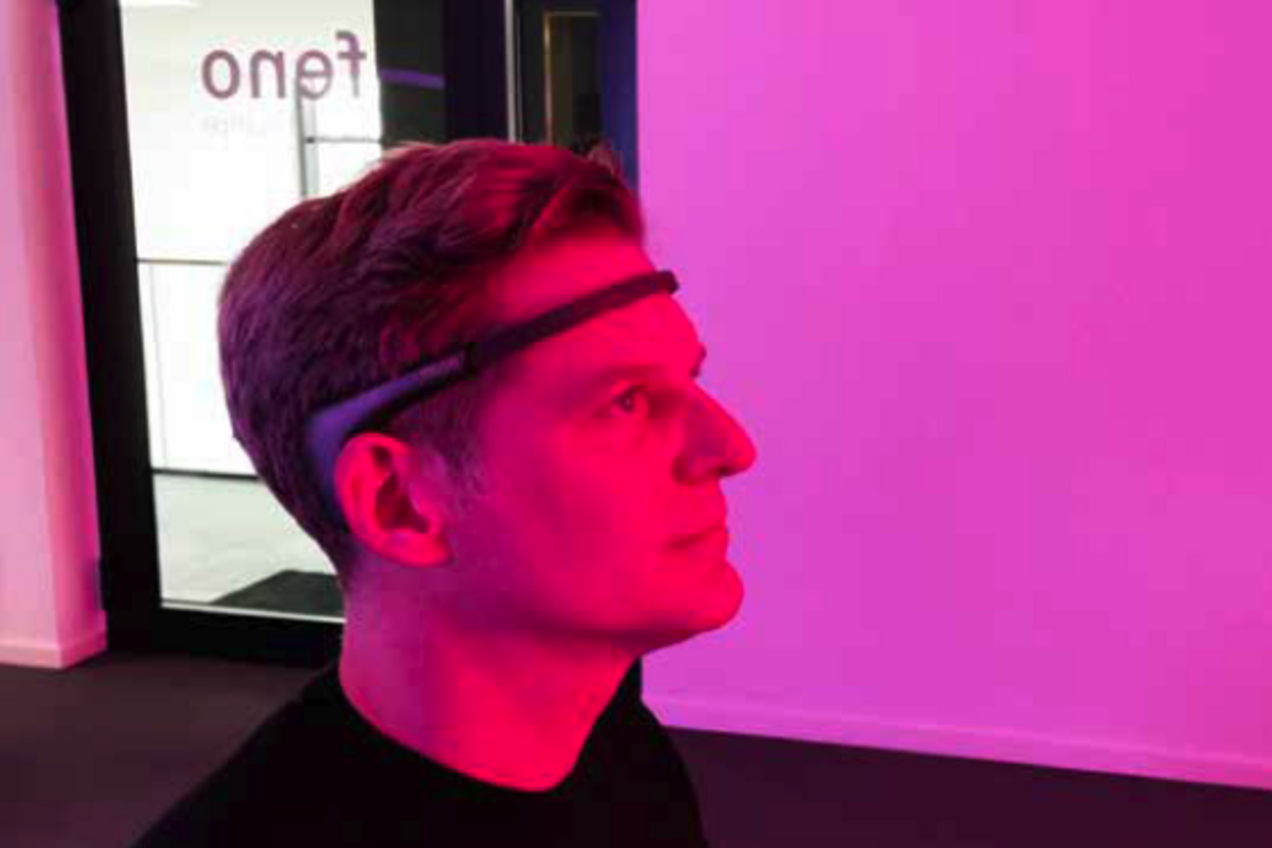
Yves Peitzner is an interdisciplinary artist and designer focused on immersive media, interactive installations, and light-driven experiences. His work combines art, technology, and narrative to create powerful multi-sensory moments. He collaborates with museums, cultural organizations, and international brands—producing everything from large-scale immersive installations to light sculptures, AI art, and innovative data visualizations.
The installation Gefühlsrauschen is a collaboration between bayern design, TISH, and Studio KLING KLANG KLONG - open from July 2 to July 5, between 4:00 PM and 9:00 PM at Galerie Ostermayr.
The installation Gefühlsrauschen is a collaboration between bayern design, TISH, and Studio KLING KLANG KLONG - open from July 2 to July 5, between 4:00 PM and 9:00 PM at Galerie Ostermayr.

Sarah Grodd
Projektmanagerin
NUEDIGITAL
Related Blog Posts

Program Update | As of May 20, 2025
The program of NUEDIGITAL 2025 is live since May 6 - its continuously getting more packed, more exiting and more vibrant! Discover now the latest Events that joined the festival program.
Published on May 20, 2025
Read more
.jpg?locale=en)
Creativity means breaking the rules – Henning Beck on thi...
In the digital age, we get hit with new info every second. Neuroscientist and author Dr. Henning Beck explains in an interview why it actually makes sense to hand off some thinking to tools, why AI isn’t necessarily 'smarter,' and why breaking the rules on purpose might just become the most important skill of the future.
Published on October 15, 2025
Read more