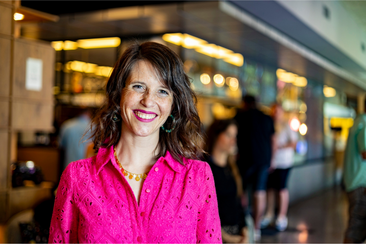
Who isn't sitting by the fire?
Published on November 17, 2026

A blog post by Alex Ulbricht
"The Fire We Share" is the theme of TEDxNuremberg 2026. On 5 December at the Meistersingerhalle, AI speaker Alex Ulbricht asks an uncomfortable question about it: who does that fire actually keep warm? Her guest post starts with a sleeping pill.
Why AI bias starts where nobody was counted
There is a sleeping pill that ranks among the most prescribed in the world. The active ingredient is zolpidem, approved in the US since 1992. For a good twenty years, the dose was the same for everyone. In January 2013, the US Food and Drug Administration cut the recommended dose for women in half.
In half.
The agency's reasoning: women clear the drug more slowly. The next morning, some still had enough of it in their blood that they could not drive safely. For twenty years, nothing came of that. When a woman crashes her car at eight in the morning, the police report does not say "dose designed around the average man". It says: driver error.
There is a pattern behind this. Until the 1990s, drugs were tested mostly on men. After the thalidomide scandal, the aim was to protect women of childbearing age. The female cycle was also seen as a confounding factor that makes trials more complicated and more expensive. The results were then simply applied to women.
That does not work. Women metabolise many drugs differently from men, and hormones play a part in it. Women are not smaller men.
The new gold has a memory
"Data is the new gold" sits on roughly every second conference slide. The comparison limps. Gold does not remember how it was mined. Data does. Every dataset records who was asked, measured and counted. And who was not. As long as data sits in a study, that keeps specialists busy. With AI, it reaches everyone. A model learns from what was and uses it to decide what comes next. Millions of times, in seconds, very politely.
Take a fashion retailer that trains its recommendation AI on the last two years of online reviews. People over 60 write reviews far less often than younger people. So the AI does not know their taste and recommends what 30-year-olds like. There is no scandal and no headline. There is only revenue quietly going elsewhere, and a report in which everything looks fine.
Bias rarely comes alone
Many companies are currently ironing AI over the data they already have and calling the result "data-driven". Which is true. It is just that hardly anyone asks afterwards which data it was driven by. At least two layers come together here. The first is the training data the model was built on. The second is the data you add yourself: customer history, personnel files, past decisions. Someone can be missing from either. So you get two chances at a blind spot for the price of one licence.
A research team led by Ivan Yamshchikov at the Technical University of Applied Sciences Würzburg-Schweinfurt tested what that looks like in everyday use in 2025. They asked language models to recommend a salary to ask for in a job interview. Same position, same level, once asking as a woman, once as a man. In many cases the woman was given a clearly lower number. That is what makes this topic uncomfortable. Bias rarely happens in a lab far away. It is in the job ad you let an AI polish. In the meeting summary you forward unread. In the dashboard you trust because it is a dashboard.
The Fire We Share
I like this year's TEDxNuremberg theme a lot. A fire that people gather around to share what they know and keep warm. But a fire only warms the people sitting around it. Whoever is not at the fire does not show up in the data. And whoever does not show up in the data does not exist as far as the system is concerned. That is what my talk on 5 December is about.
Three questions for Monday morning
Until then, here is something to try. The next time someone puts a number, a ranking or an AI recommendation in front of you, ask three questions:
- Who was counted? What year is the data from, who collected it, and who was in it?
- Who is missing? Which customers, applicants or patients never had a chance of ending up in this dataset?
- Who notices when the number is wrong? And is that person allowed to say "stop"?
The questions are small and slightly annoying. They cost two minutes in a meeting. The sleeping pill took twenty years. Fair AI starts with someone counting who is sitting by the fire. And then moving over a little.
About the author
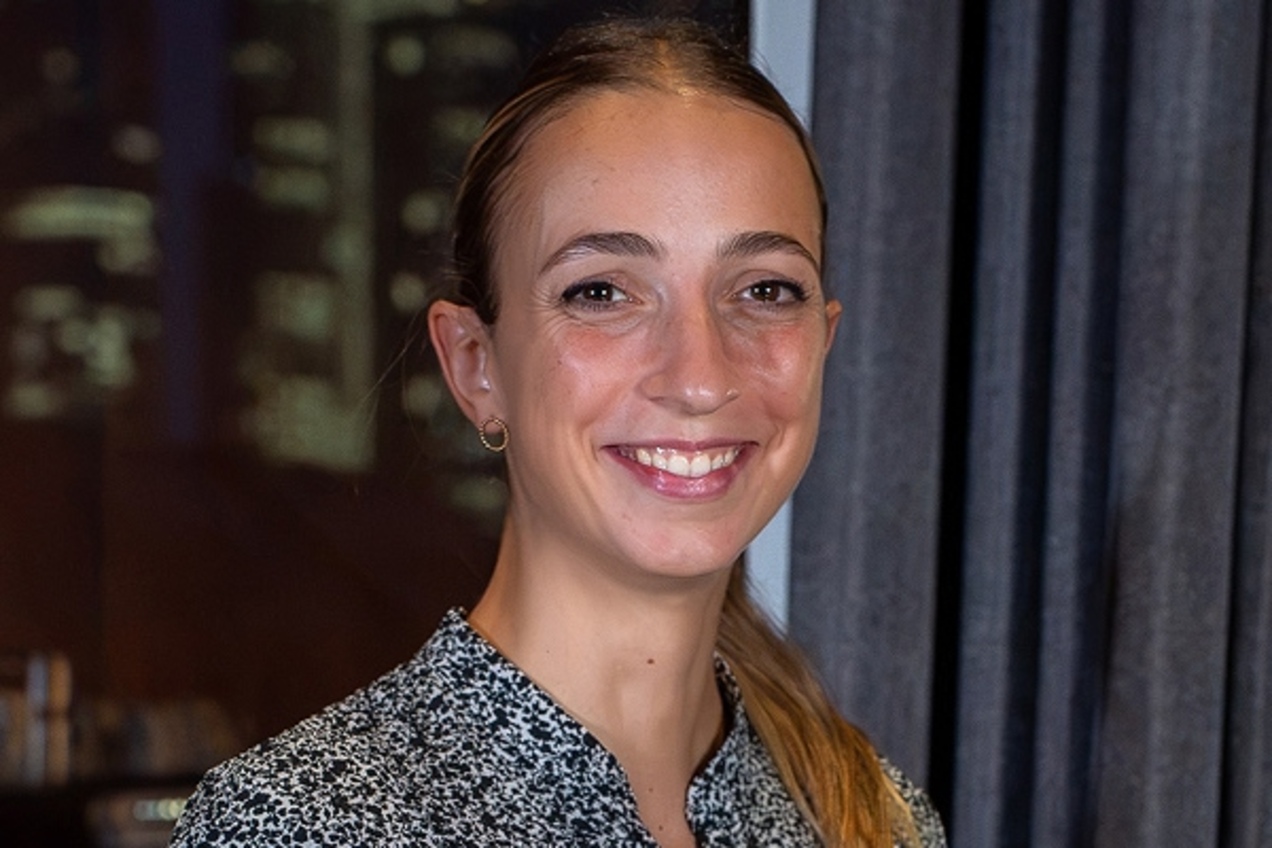
Alex Ulbricht is a keynote speaker on AI, fairness and responsibility, based in the Nuremberg metropolitan region. She has worked in the IT industry for more than twelve years, including roles as sales director and AI evangelist at Fujitsu. Today she speaks on stages from mid-sized companies to DAX corporations, more than 400 times so far. In 2025 she was named IT Woman of the Year for her work on AI fairness.
Alongside keynotes, she works with teams on their own use cases. In her workshops, departments from HR to sales learn which questions to ask of data and AI output before they decide on it. More at alex-ulbricht.com.
- Advertisement -
This year’s TEDxNuremberg will take place on December 5, 2026, at the Meistersingerhalle under the theme “The Fire We Share.” The all-day event will feature speakers who open up new perspectives and inspire reflection. Alex Ulbricht will kick off the event with her talk “Who wasn’t in the room? Where AI bias really comes from.”
Want to attend?
In our next NUEDIGITAL newsletter, we’ll be giving away 2 tickets to TEDxNuremberg 2026. Anyone who signs up by November 26 can enter the drawing.

Svenja Sorger
Marketing, Projektorganisation
Nürnberg Digital Festival
Related Blog Posts

How do you plan a successful event? The 5 most important ...
Johanna and Elwira from the NUEDIGITAL team know the most common pitfalls and share what really makes a difference at an event — from the right image formats to the very first question you should ask yourself.
Published on March 31, 2026
Read more
From AI-powered gardening to phone bots: AI HUB Nuremberg...
Andrea Reindel on the AI HUB Nuremberg, AI use cases in gardening and medical practices, and why the project is being extended by two years.
Published on May 08, 2026
Read more